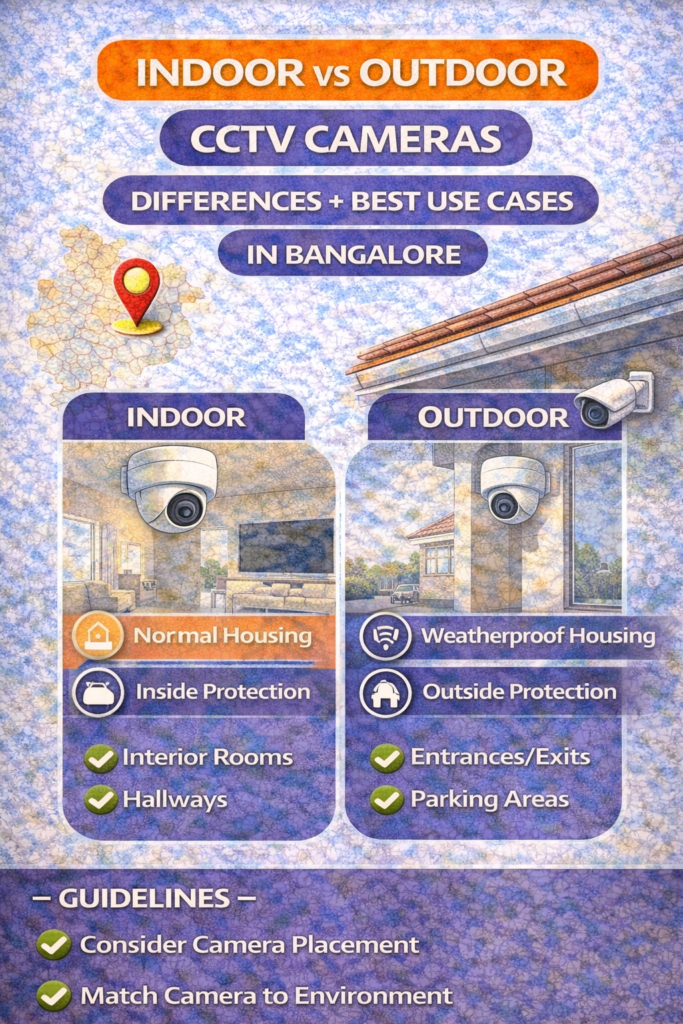
Indoor vs Outdoor CCTV Cameras – Differences + Best Use Cases in Bangalore
One of the most common mistakes people make while installing CCTV is using the wrong camera type in the wrong place.
Installing an indoor camera outside Using an outdoor camera unnecessarily indoors
Both lead to poor footage, faster damage, wasted money, and false security.
In 2026, CCTV cameras are purpose-built. Indoor and outdoor cameras are NOT interchangeable, even if they look similar. This guide explains the exact differences, when to use which, and how to design a balanced CCTV setup for homes, villas, shops, and offices in Bangalore.
Quick Summary (If You’re in a Hurry)
Indoor cameras → For rooms, corridors, living areas
Outdoor cameras → For gates, parking, exterior walls
Indoor cameras ≠ weatherproof
Outdoor cameras = stronger, visible, durable
A good CCTV setup uses both, not one type only
What Is an Indoor CCTV Camera?
Indoor CCTV cameras are designed for controlled environments.
Typical Use Areas
Living rooms
Hallways
Staircases
Office interiors
Shops & showrooms
Key Characteristics
Compact and lightweight
Wide viewing angle
Moderate night vision
Plastic casing
Discreet appearance
Indoor cameras focus on monitoring movement and identifying faces within shorter distances.
What Is an Outdoor CCTV Camera?
Outdoor CCTV cameras are designed to handle harsh conditions.
Typical Use Areas
Main gates
Parking areas
Building exteriors
Warehouses
Open terraces
Key Characteristics
Weatherproof (IP66 / IP67)
Metal or reinforced casing
Long-range night vision
Higher durability
Visible deterrent design
Outdoor cameras focus on perimeter security and long-distance visibility.
Indoor vs Outdoor CCTV Cameras – Core Differences
Feature
Indoor CCTV
Outdoor CCTV
Weather resistance
❌ No
✅ Yes
Build quality
Light
Heavy-duty
Night vision range
Short–medium
Long
Visibility
Discreet
Highly visible
Installation height
7–9 feet
9–12 feet
Cost
Lower
Higher
Use case
Interior monitoring
Perimeter security
Bangalore-Specific Factors You Must Consider
1. Weather Conditions
Heavy rains
Dust during summer
High humidity
👉 Outdoor cameras must be weatherproof. Indoor cameras will fail quickly if used outside.
2. Power Fluctuations
Common in independent houses
Affects outdoor camera longevity
👉 Outdoor cameras need:
Stable power
Proper earthing
Surge protection
3. Apartment & Association Rules
Outdoor cameras may require approval
Indoor cameras preferred in common areas
Always confirm before drilling or mounting externally.
Where Indoor CCTV Cameras Work Best
Ideal Indoor Camera Locations
Main door (inside-facing)
Living room
Corridor connecting rooms
Staircase inside duplex
Shop interior
Office work floor
Why Indoor Cameras Are Better Here
Better face recognition
Wider angle
Less intimidating
Cleaner aesthetics
📌 Dome cameras are the most popular indoor choice.
Where Outdoor CCTV Cameras Are Mandatory
Ideal Outdoor Camera Locations
Independent house gate
Parking area
Building exterior
Backyards
Warehouse entry
Why Outdoor Cameras Are Necessary
Rain & dust protection
Better night vision
Tamper resistance
Visible deterrence
📌 Bullet cameras dominate outdoor use.
Can Indoor Cameras Be Used Outdoors? (Short Answer: No)
Why It’s a Bad Idea
❌ Water damage ❌ Fogging of lens ❌ Rusting of components ❌ Night vision failure ❌ Voided warranty
Even “covered” areas like balconies still face humidity and dust.
Can Outdoor Cameras Be Used Indoors?
Technically yes—but not recommended.
Downsides
Too bulky
Narrow viewing angle
Unnecessary cost
Intimidating for homes
Use outdoor cameras indoors only for:
Warehouses
Large halls
Parking interiors
Indoor vs Outdoor Cameras – Night Vision Comparison
Indoor Night Vision
Range: 10–20 meters
Optimized for rooms
Clear face capture
Outdoor Night Vision
Range: 30–50 meters
Handles total darkness
Better for perimeter tracking
👉 Using indoor cameras outdoors results in pitch-black footage at night.
Wired vs WiFi: Indoor & Outdoor Compatibility
Indoor
WiFi cameras work well
Wired also works
Less interference
Outdoor
Wired cameras recommended
WiFi unreliable over distance
Metal gates block signals
👉 For outdoor use in Bangalore, wired CCTV is safer.
Cost Difference (2026 Bangalore Pricing)
Camera Type
Avg Price
Indoor dome camera
₹1,500 – ₹2,500
Outdoor bullet camera
₹2,000 – ₹3,500
Premium outdoor camera
₹4,000+
Outdoor cameras cost more due to:
Build quality
Weatherproofing
Night vision hardware
Best Indoor–Outdoor Camera Ratio
Apartments
80% indoor
20% outdoor (balcony / entrance)
Independent Houses
50% indoor
50% outdoor
Villas
40% indoor
60% outdoor
Balanced ratio = complete coverage.
Common Mistakes People Make
❌ Using indoor cameras at gates ❌ Ignoring outdoor coverage entirely ❌ Overusing outdoor cameras indoors ❌ No weatherproof junction boxes ❌ Poor angle causing glare
These mistakes reduce CCTV effectiveness drastically.
How to Choose the Right Combination
Ask yourself:
Where can someone enter from?
Which areas are exposed to weather?
Where is face recognition critical?
Do I need visibility as deterrence?
Your answers decide camera type, not brand.
FAQs – Indoor vs Outdoor CCTV Cameras
Yes, if IP66/IP67 rated.
Yes, but with limited range.
Yes, due to durability and night vision.
Yes—and you should.
Mostly indoor cameras.
Final Verdict
There is no competition between indoor and outdoor CCTV cameras—they serve different roles.
Indoor cameras = monitoring & clarity
Outdoor cameras = protection & deterrence
A strong CCTV system in Bangalore always uses the right camera in the right place.