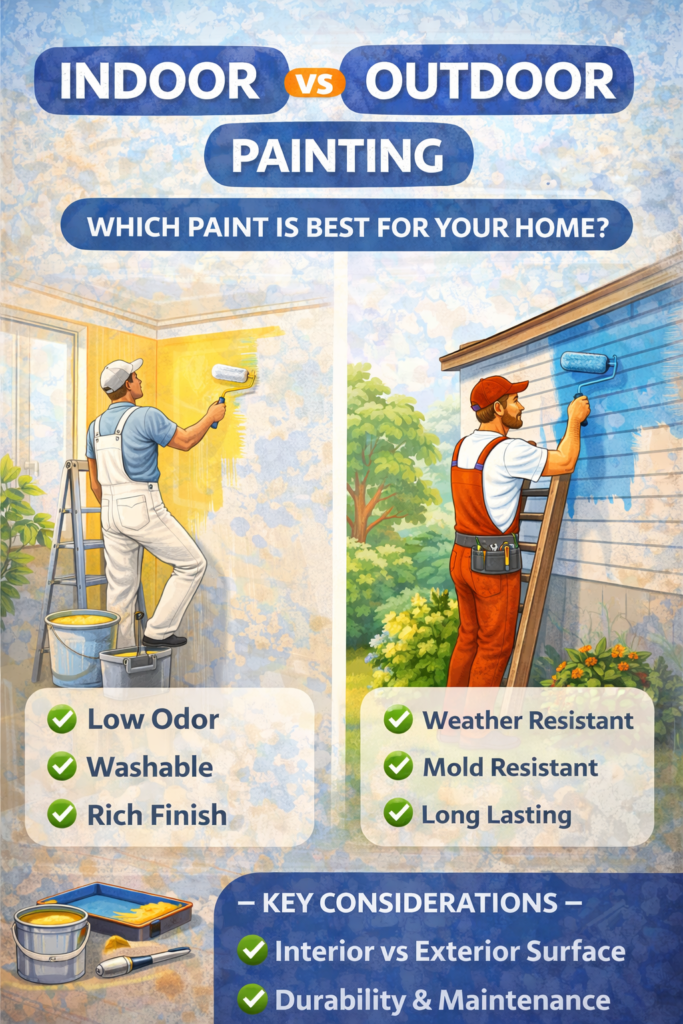
Indoor vs Outdoor Painting: Which Paint Is Best for Your Home?
Choosing the right paint for your home is not just about colors and aesthetics. The type of paint you select—interior or exterior—directly affects durability, maintenance costs, health, and the overall lifespan of your walls. Many homeowners make the mistake of using the same paint type everywhere, which often leads to peeling, fading, dampness issues, and frequent repainting.
This detailed guide explains indoor vs outdoor painting, the key differences between interior and exterior paints, and how to choose the best paint for your home in Indian conditions.
Why Choosing the Right Paint Matters
Paint serves two major purposes:
Protection – Shields surfaces from moisture, heat, stains, and wear
Appearance – Enhances beauty, mood, and property value
Using the wrong paint type can cause:
Cracks and peeling within months
Fungal growth due to trapped moisture
Discoloration and fading
Higher repainting costs
Understanding the difference between indoor and outdoor paints ensures long-lasting results and better value for money.
What Is Interior (Indoor) Paint?
Interior paints are specially designed for inside living spaces such as bedrooms, living rooms, kitchens, bathrooms, and ceilings. These paints prioritize smooth finish, low odor, easy cleaning, and safety.
Key Characteristics of Interior Paint
Low or zero VOC (safe for indoor air quality)
Smooth texture and rich finish
Easy to clean and maintain
Resistant to stains and mild moisture
Wide range of finishes and colors
Interior paints are not designed to handle extreme weather, sunlight, or heavy moisture.
Common Types of Interior Paints
1. Emulsion Paint (Most Popular)
Water-based
Smooth and elegant finish
Low odor
Ideal for living rooms and bedrooms
2. Plastic Paint
Washable and stain-resistant
Long-lasting
Best for high-traffic areas
3. Matte Finish Paint
Non-reflective, premium look
Hides wall imperfections
Needs gentle cleaning
4. Satin & Silk Finish Paint
Soft sheen
Easy to maintain
Suitable for modern interiors
5. Anti-Fungal / Anti-Bacterial Paint
Ideal for kitchens and bathrooms
Prevents mold and bacteria growth
Suitable for humid Indian climates
What Is Exterior (Outdoor) Paint?
Exterior paints are designed to withstand harsh outdoor conditions, including:
Intense sunlight
Heavy rainfall
Dust and pollution
Temperature fluctuations
These paints focus more on durability and protection than appearance alone.
Key Characteristics of Exterior Paint
UV-resistant pigments
Waterproof and weatherproof
Anti-algal and anti-fungal properties
Thick composition for surface protection
Fade-resistant colors
Exterior paint forms a protective shield around your home.
Types of Exterior Paints Commonly Used in India
1. Exterior Emulsion Paint
Water-based
Good color retention
Resistant to cracking
Budget-friendly option
2. Acrylic Exterior Paint
Flexible and durable
Handles temperature changes well
Long-lasting finish
3. Cement-Based Paint
Suitable for new constructions
Cost-effective
Limited color options
4. Elastomeric Paint
High flexibility
Covers hairline cracks
Ideal for extreme climates
5. Textured Exterior Paint
Decorative finish
Adds depth and character
Conceals surface imperfections
Indoor vs Outdoor Paint: Key Differences
Feature
Interior Paint
Exterior Paint
Purpose
Aesthetic & comfort
Protection & durability
Weather Resistance
Low
High
UV Protection
No
Yes
Moisture Resistance
Moderate
Very high
VOC Levels
Low
Higher
Texture
Smooth
Thick
Lifespan
4–6 years
7–10 years
Can You Use Exterior Paint Indoors?
Not recommended.
Reasons:
Strong chemical smell
Higher VOC content
Poor breathability indoors
Health risks with long-term exposure
Exterior paint may look durable, but it is unsafe for enclosed living spaces.
Can Interior Paint Be Used Outside?
Never.
Interior paints:
Fade quickly under sunlight
Absorb moisture
Peel and crack during monsoon
Attract fungal growth
This leads to repainting within 6–12 months.
Choosing the Right Paint for Each Area of Your Home
Living Room & Bedrooms
Interior emulsion or matte paint
Focus on color tone and finish
Low VOC preferred
Kitchen
Washable plastic paint
Anti-grease and moisture-resistant
Satin or semi-gloss finish
Bathroom
Anti-fungal interior paint
Water-resistant coating
Mold protection essential
Exterior Walls
Weatherproof exterior emulsion
UV protection mandatory
Anti-algal coating recommended
Balcony & Utility Areas
Exterior-grade paint
Moisture and heat resistant
Best Paint Choice Based on Indian Climate
Hot & Dry Regions
UV-resistant exterior paint
Light color shades to reduce heat
Coastal Areas
Anti-salt and anti-fungal paint
Waterproof coatings essential
Heavy Rainfall Zones
Elastomeric exterior paint
High water resistance
Urban & Polluted Cities
Cost Comparison: Interior vs Exterior Painting (India)
Type
Approx Cost per Sq Ft
Interior Emulsion
₹12 – ₹30
Premium Interior Paint
₹35 – ₹60
Exterior Emulsion
₹18 – ₹40
Premium Exterior Paint
₹45 – ₹80
Costs vary based on brand, surface condition, labor, and city.
Preparation Process: Interior vs Exterior Painting
Interior Surface Preparation
Wall cleaning
Crack filling
Putty application
Primer coating
Exterior Surface Preparation
Pressure washing
Algae removal
Waterproof primer
Crack sealing
Proper preparation increases paint life by 30–40%.
Common Mistakes Homeowners Make
Using the same paint indoors and outdoors
Skipping primer
Choosing cheap paint for exteriors
Ignoring moisture issues
Painting without surface treatment
Avoiding these mistakes saves money long-term.
How Long Does Each Paint Type Last?
Interior Paint: 4–6 years
Premium Interior Paint: 7–8 years
Exterior Paint: 7–10 years
High-Performance Exterior Paint: 10–12 years
Expert Tips for Best Results
Always use paint as per its purpose
Invest more in exterior paint quality
Choose lighter exterior colors for heat control
Opt for professional painting for uniform finish
Schedule exterior painting before monsoon
FAQs – Indoor vs Outdoor Painting
A combination of premium interior emulsion and weatherproof exterior paint works best.
Yes, most exterior paints are water-resistant or waterproof.
No. Balconies require exterior-grade paint.
Every 7–10 years, depending on climate and paint quality.
Yes, it prevents moisture damage and surface cracks.
Final Verdict: Which Paint Is Best for Your Home?
There is no single paint suitable for both indoors and outdoors.
Use interior paint for comfort, beauty, and safety
Use exterior paint for protection, durability, and weather resistance
Choosing the right paint type ensures your home looks great and stays protected for years.